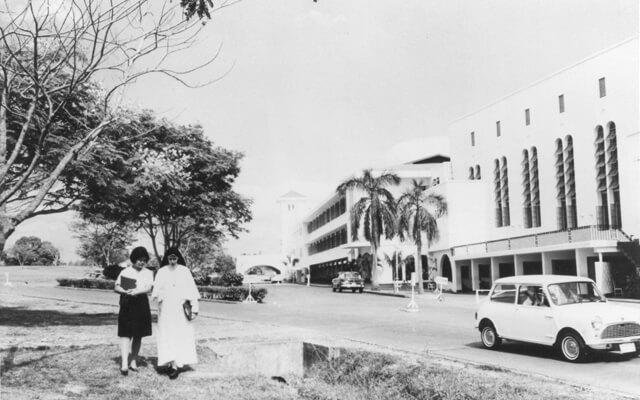
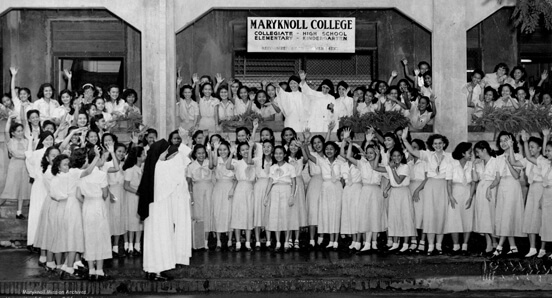
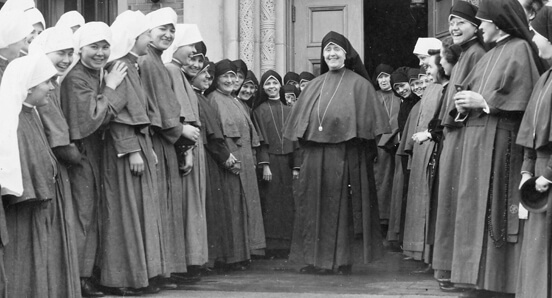
Miriam College dates back to 1926 when the Archbishop of Manila, then Reverend Michael O’ Doherty, requested the Sisters of the Maryknoll Congregation in New York to initiate a teacher-training program for women in the Philippines. In an old remodelled Augustinian Convent in Malabon, Rizal, the Malabon Normal School was established. The school transferred sites several times until finally in 1952, with its name officially changed to Maryknoll College, it laid down its permanent roots in Diliman (or Loyola Heights), Quezon City.
After Vatican II, the Maryknoll congregation began to evaluate its work, not only in the Philippines but worldwide, in the light of their original apostolate as a missionary order. In the 60s, the Maryknoll congregation saw the readiness of the Filipino Laity to continue the educational mission they had started. In 1977, the ownership and management of the school were turned over to lay administrators.
Under Lay Leaders and guided by the legacy of the progressive Maryknoll founders, the school managed to create its own distinct identity as it transitioned from Maryknoll to Miriam College. Through the years, the school not only responded but also thrived, despite the challenges of the times. Under different government administrations, it continued to uphold truth, justice, peace, and integrity of creation—core values that contributed to making Miriam College the premier educational institution that it is today.
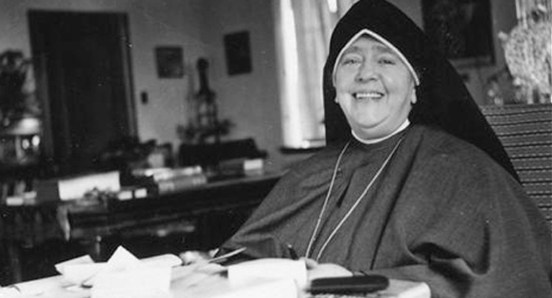
Founder, Maryknoll Sisters
(1882-1955)
Mother Mary Joseph Rogers
Our foundress, Mother Mary Joseph, often spoke of the Maryknoll Spirit “as being a reflection of the love of God, nothing more nor less than that, a reflection of the love of God.” (MMJ: 1932)
Lay Women Leaders
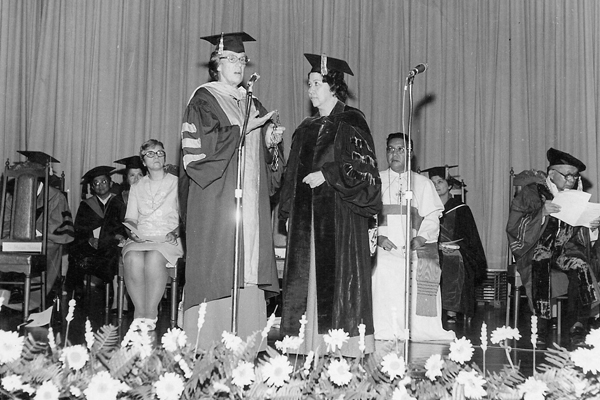
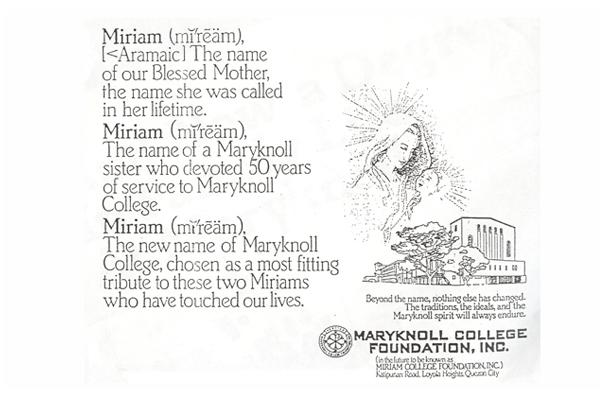
After 50 years of leadership, the 70s saw the Maryknoll Sisters turn the reins of the school over to the able hands of lay women leaders. The process of renaming the school from Maryknoll to Miriam College soon followed until it was made official in 1989.
Fully embracing the school’s new name and identity, these women leaders stirred the school to become the learner-centered, socially aware, and global institution that it is today. Still very much rooted in the value of service of the Maryknoll Sisters, they introduced changes that prepared Miriam College students for a continually changing world that is technology-driven and vulnerable to disruptions such as a pandemic.
First lay president, Dr. Paz V. Adriano
Maryknoll is renamed Miriam College
The Mission Continues
After almost a hundred years of overcoming challenges and breaking new grounds, Miriam College’s mission continues. It’s expansion in Laguna through Miriam College Nuvali, and soon in Pampanga through Miriam College Alviera, is a result of the institution’s resolve to spread its brand of education to new communities so that many more may benefit.
When you become part of Miriam College (MC), that deep sense of rootedness shared by all members of the MC community is instantly felt.
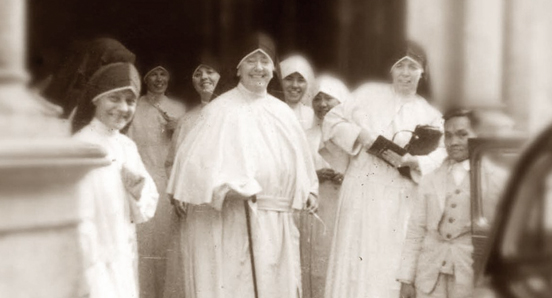
This is not just a result of nearly a hundred years of creating new milestones but of unwavering faith to a mission that first brought the brave Maryknoll Sisters of New York to Philippine shores in 1926.
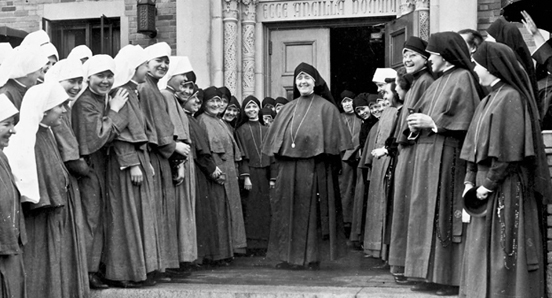
Trailblazers in Habits
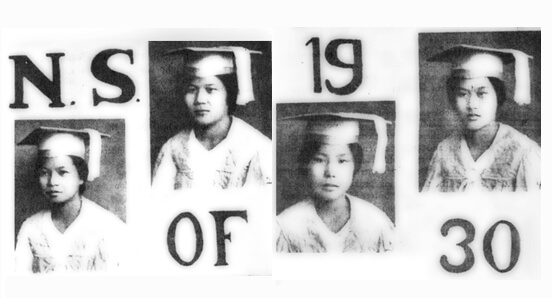
At the very core of the Maryknoll Sisters’ mission is education, starting with the very first teacher training school they put up in Malabon. After producing the institution’s first four women graduates in 1930, their admirable work in education continued and flourished throughout the Philippines. Maryknoll College in Diliman, Quezon City was to be these “trailblazers in habits’” biggest and most enduring legacy, producing tens of thousands of graduates since.