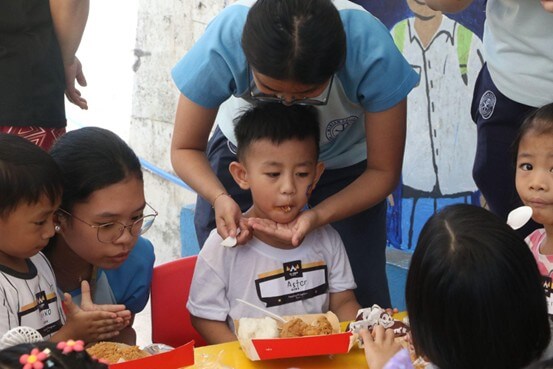
Miriam College High School (MCHS) actively contributes to SDG 2: Zero Hunger through its Social Action programs that address food insecurity and promote sustainable practices. One key initiative is the “Batang Healthy, Batang Happy” feeding program, which provides nutritious meals to children in vulnerable communities. This project was carefully designed with input from both the Social Action Office and partner community representatives, ensuring that the program reflects cooperation, cultural sensitivity, and the real needs of beneficiaries. It also includes proper documentation and evaluation to measure impact and improve future efforts.
Beyond immediate relief, MCHS focuses on long-term solutions through the Bigasan Livelihood Program, which offers families in Kaisang Ugnayang Mamamayan (KUM) an additional source of income. Supported by the ABM Salindunong Program, student-led fundraising, and the Social Action Office, the initiative trains participants in financial literacy, business management, and entrepreneurship. To ensure sustainability, capacity-building workshops cover bookkeeping, marketing, and basic computer skills using tools like Microsoft Office and Canva. HUMSS students also contribute by organizing fundraising activities as part of their Community Engagement course.
These programs go beyond feeding and income generation—they foster awareness about food security, responsible food production, and community empowerment. Students, teachers, and stakeholders are encouraged to take part through volunteerism, promoting sustainable agriculture, and distributing harvests to benefit entire communities.
By combining outreach, education, and livelihood support, MCHS makes a concrete contribution toward ending hunger, ensuring access to nutritious food, and building resilient communities—key goals of SDG 2: Zero Hunger.
By: Myra Broadway