




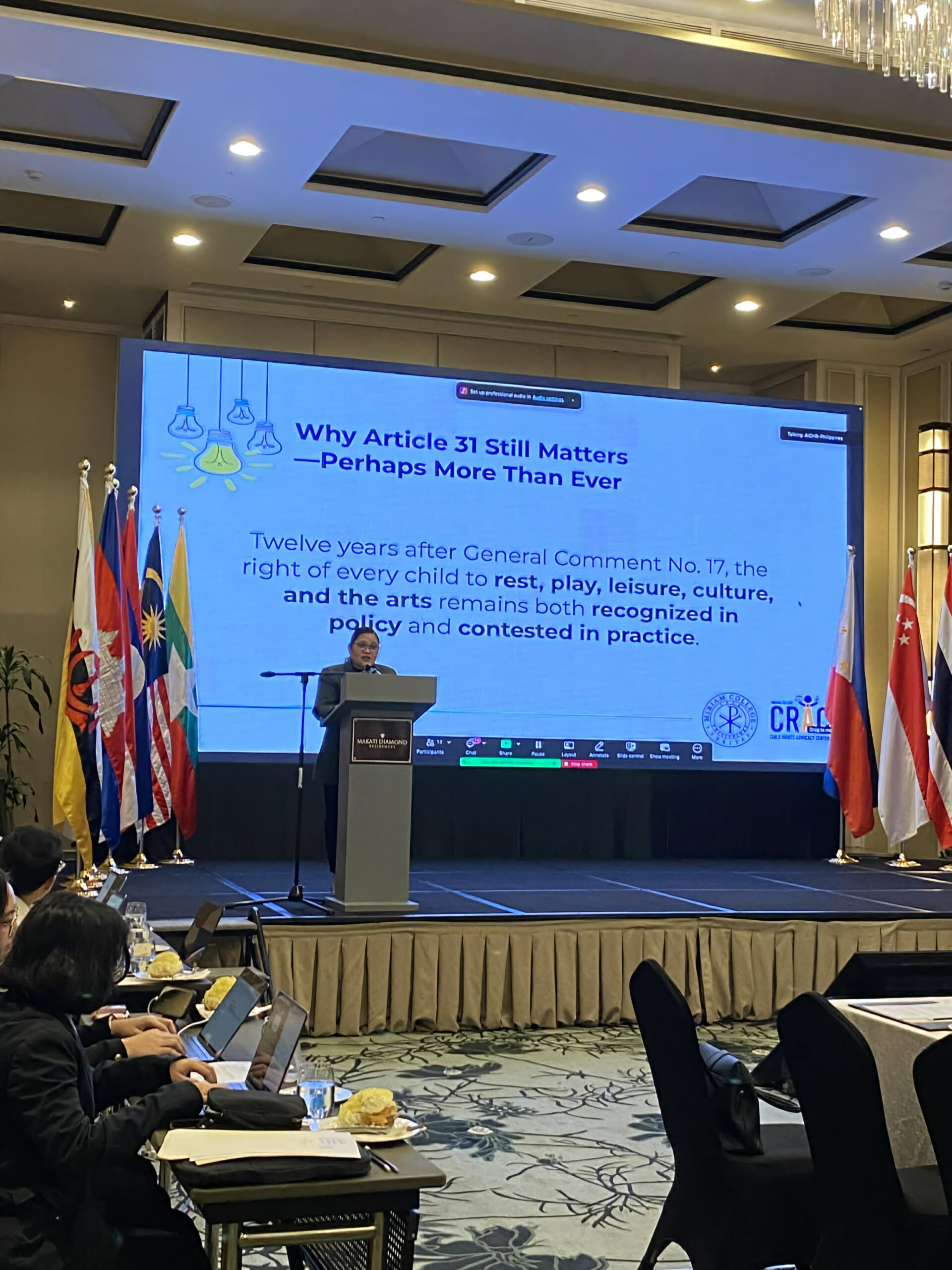
Grounded in Miriam College’s mission to advance social justice, peace, and inclusive development, the Miriam College Child Rights Advocacy Center (CRAC) continues to champion a rights-based approach to sustainable development—one that places children’s dignity, well-being, and participation at its core. Central to this advocacy is Article 31 of the UN Convention on the Rights of the Child (UNCRC), which affirms every child’s right to rest, leisure, play, and participation in cultural and artistic life.
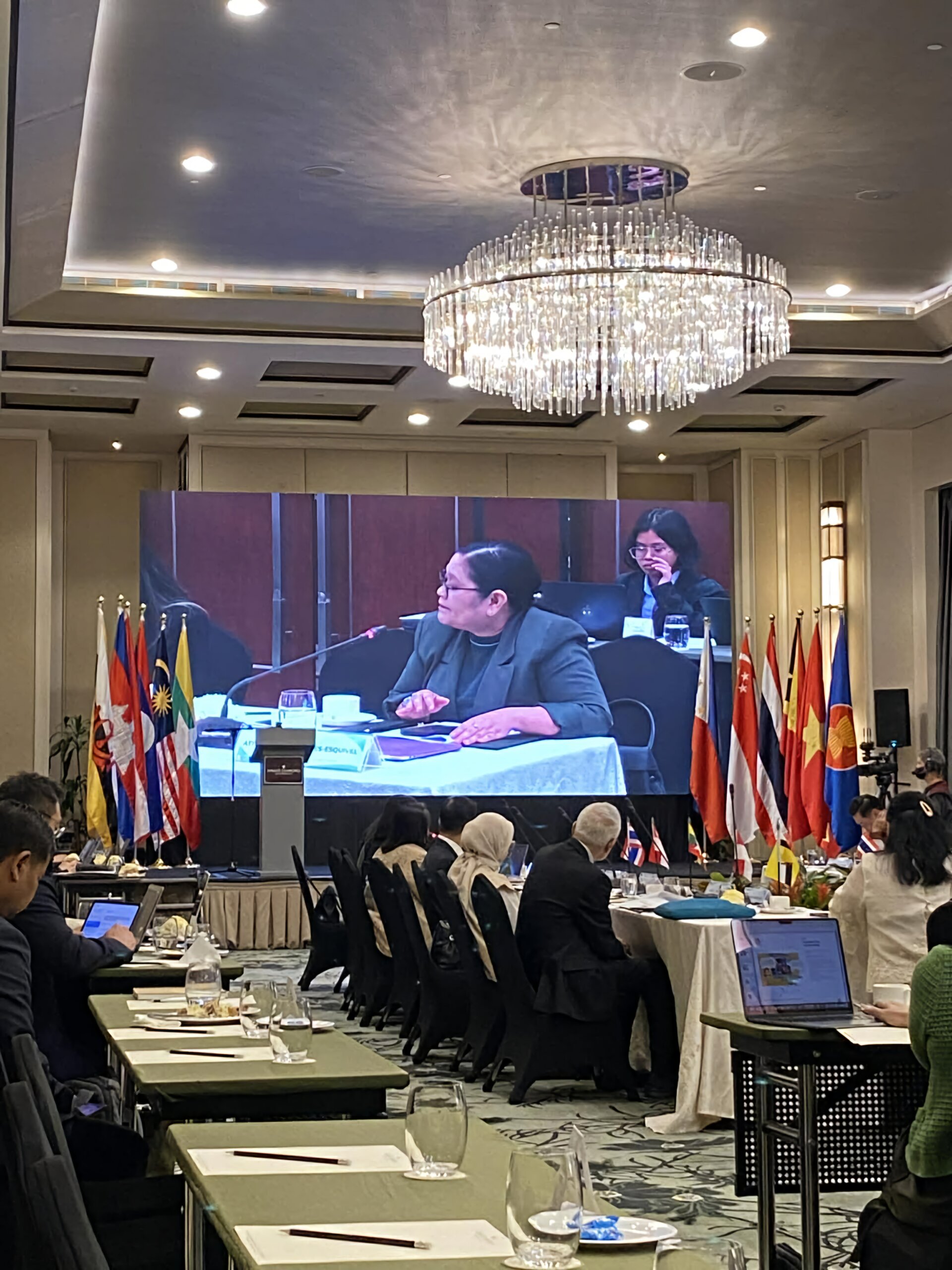
CRAC’s engagement in regional and national platforms, including the 6th ASEAN Dialogue on the UNCRC last December 17, 2025, reflects Miriam College’s institutional commitment to embedding children’s rights within the Sustainable Development Goals (SDGs). Through the participation of Atty. Mylen B. Gonzales-Esquivel, Executive Director of CRAC, as a Resource Speaker, the Center brought forward field-based insights that underscore how play, creativity, and cultural participation are not peripheral concerns, but essential components of child protection, education, and human development.
From the field, CRAC consistently observes that play and creative expression are critical to children’s mental health, emotional regulation, and psychosocial recovery, particularly for those affected by violence, disaster, poverty, and displacement. This perspective directly reinforces SDG 4 (Quality Education) by advocating for inclusive, developmentally appropriate, and rights-based learning environments that extend beyond formal schooling. At the same time, SDG 3 (Good Health and Well-Being) advances by recognizing play, rest, and cultural expression as protective factors that strengthen resilience and emotional well-being.
Aligned with Miriam College’s long-standing advocacy for peace, justice, and gender equality, CRAC’s contributions to the Dialogue also advanced SDG 16 (Peace, Justice, and Strong Institutions) by supporting stronger child rights governance, accountability mechanisms, and duty-bearer capacity across the region. The emphasis on equal access to safe spaces for play, expression, and participation likewise affirmed SDG 5 (Gender Equality), ensuring that all children—regardless of gender—can fully enjoy their rights without discrimination.
By foregrounding lived realities and the voices of marginalized children, including those from indigenous, migrant, and vulnerable communities, CRAC further contributed to SDG 10 (Reduced Inequalities)—a core concern of Miriam College’s community engagement and outreach work. These efforts highlight the need to address persistent gaps such as over-academicization, shrinking play spaces, and unequal access to cultural life, particularly in urban and disadvantaged settings.
Finally, CRAC’s participation in the ASEAN Dialogue exemplified SDG 17 (Partnerships for the Goals). It reflected Miriam College’s strong institutional emphasis on collaboration among academic institutions, government agencies, civil society, and regional partners. Through these partnerships, Miriam College, through CRAC, continues to translate academic expertise, field practice, and advocacy into meaningful policy influence and social impact.
Ultimately, CRAC’s work affirms a central principle of Miriam College’s SDG framework: protecting children’s right to rest, play, and cultural participation is integral to sustainable, inclusive, and peaceful development. By safeguarding childhood itself, Miriam College contributes to building societies that value dignity, resilience, and humanity—today and for generations to come.