


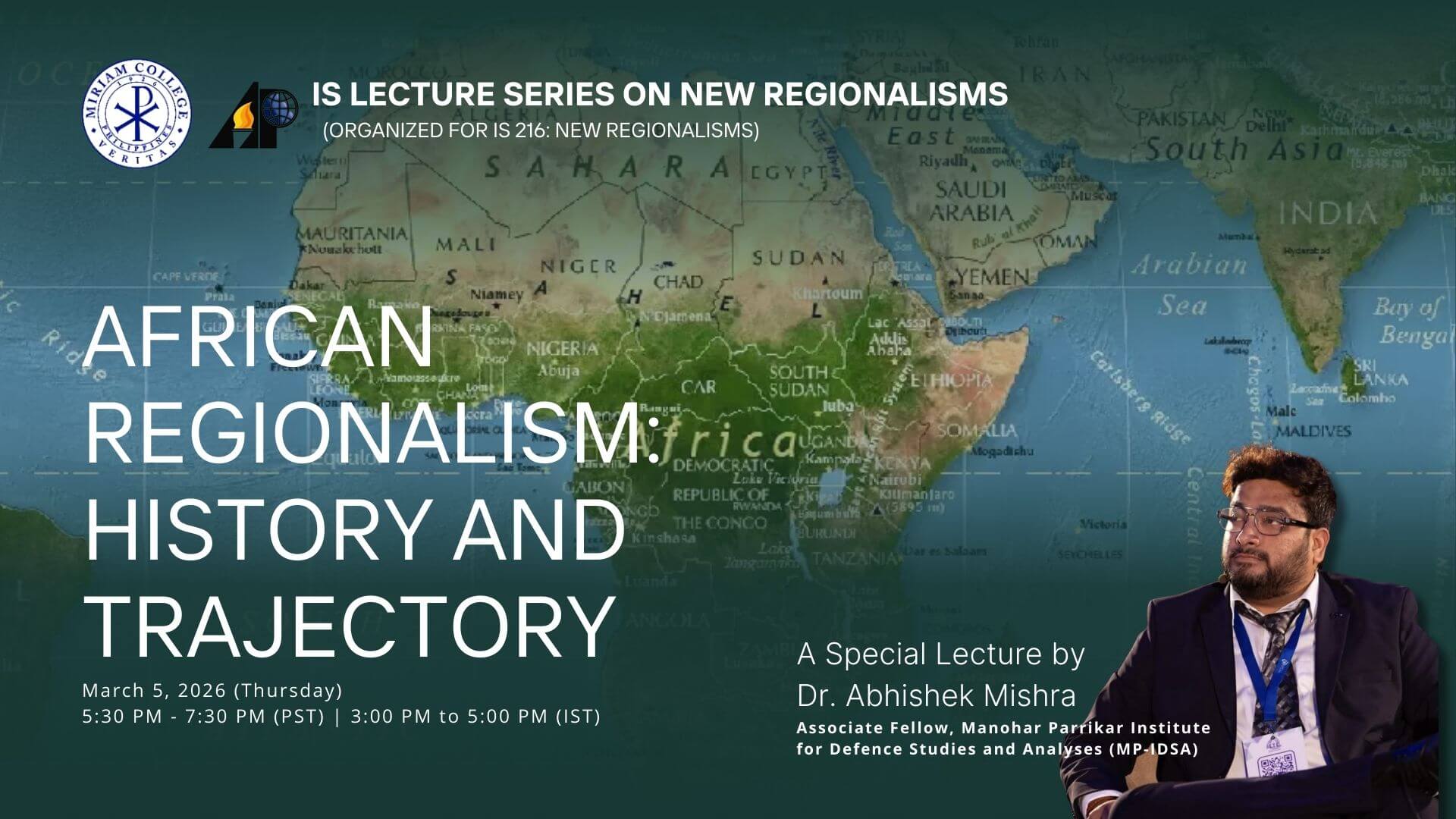
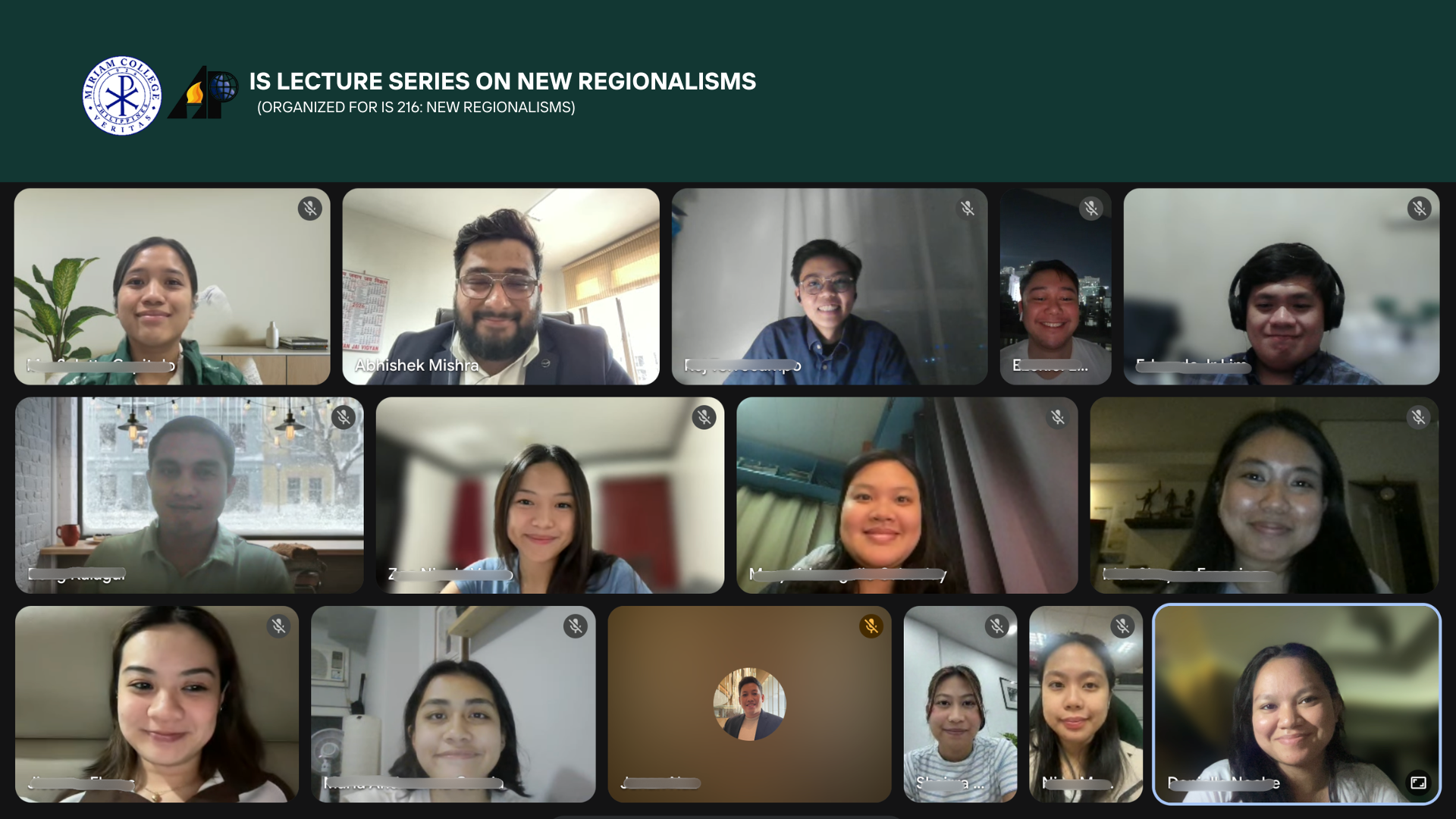
The New Regionalisms class (IS 216) of the International Studies Graduate Program recently hosted Dr. Abhishek Mishra, Associate Fellow at the Manohar Parrikar Institute for Defence Studies and Analyses (MP-IDSA), for a special lecture titled “African Regionalism: History and Trajectory.”
The session provided a deep dive into the continent’s journey from colonial fragmentation to building a strategic force in international affairs. Rooted in the philosophy of “African solutions to African problems,” he emphasized that this is not merely a slogan, but a norm designed to protect Africa from the persistent external pressures and to guide how countries grapple with regional challenges.
A focal point of the discussion was the African Continental Free Trade Area (AfCFTA). Dr. Mishra outlined how this landmark agreement is poised to turn Africa into the world’s largest integrated trading bloc. He explained that by harmonizing systems of production and reducing internal barriers, Africa is transitioning from a bridge for external resource extraction to a self-sustaining regional market.
Moving from land to sea, Dr. Mishra shared his primary research on the Western Indian Ocean Region. He specifically discussed India’s supporting role in this architecture. He also highlighted the critical role of maritime security in regional integration, noting that regionness in Africa is increasingly defined by the ability to secure its Blue Economy.
The open forum saw spirited engagement from students regarding the new scramble for Africa. Students interrogated the varying motivations of the US, EU, China, and India. They noted that while external powers provide resources, African states are exercising significant agency by hedging and choosing partners that align with their specific national development goals. They also delved into potential intra-regional exchanges between Africa and Southeast Asia, noting that both remain tied to challenges born out of their colonial past.
The special lecture serves as a vital space for International Studies (IS) graduate students to transform theoretical classroom discussions into high-level professional dialogues with global experts.